THE BAY
Grama Bay: the beach, the cliffs and the cave of writings
Grama Bay is small enough to take in from the boat: a beach of white stones, cliffs around the water and, in the rock, a cave known for the writing cut into it. Each part is described below as Albania's tourism and protected-areas agencies record it.
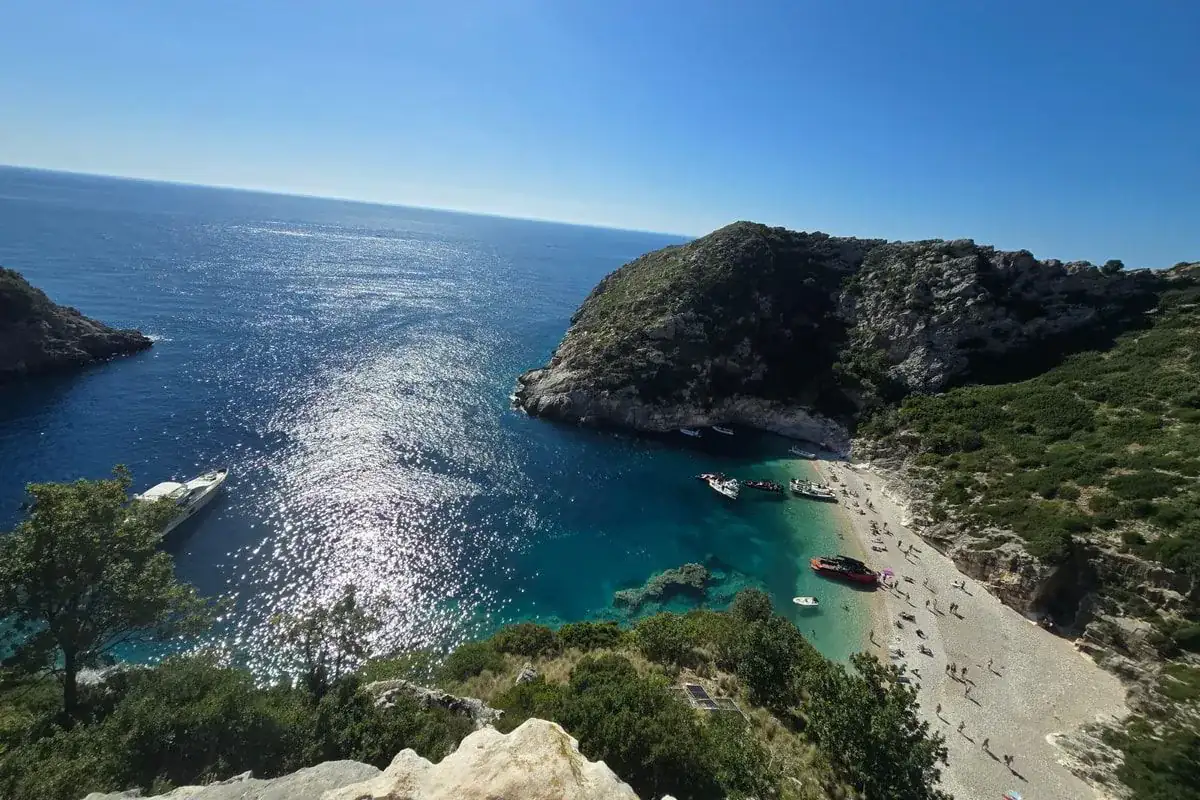
What is the beach like?
Grama's beach is made of white stones and pebbles, and the water in front of it is clear. Albania's National Tourism Agency describes an untouched white-stone beach below impressive cliffs and calls the bay suitable for swimming, relaxing and exploring.
On Triton's day trip, Grama is the stop for swimming, snorkelling and sunbathing, and the snorkelling equipment is part of the package. The stones are hard on bare feet, so pack the flip-flops that Triton lists among the things to bring.
A sheltered inlet under the cliffs
Grama is a narrow inlet that reaches only a few hundred metres into the land, with a rocky shore and cliffs. The National Agency of Protected Areas, which records the bay as a natural monument, adds that there are probably underwater caves along this stretch of coast as well.
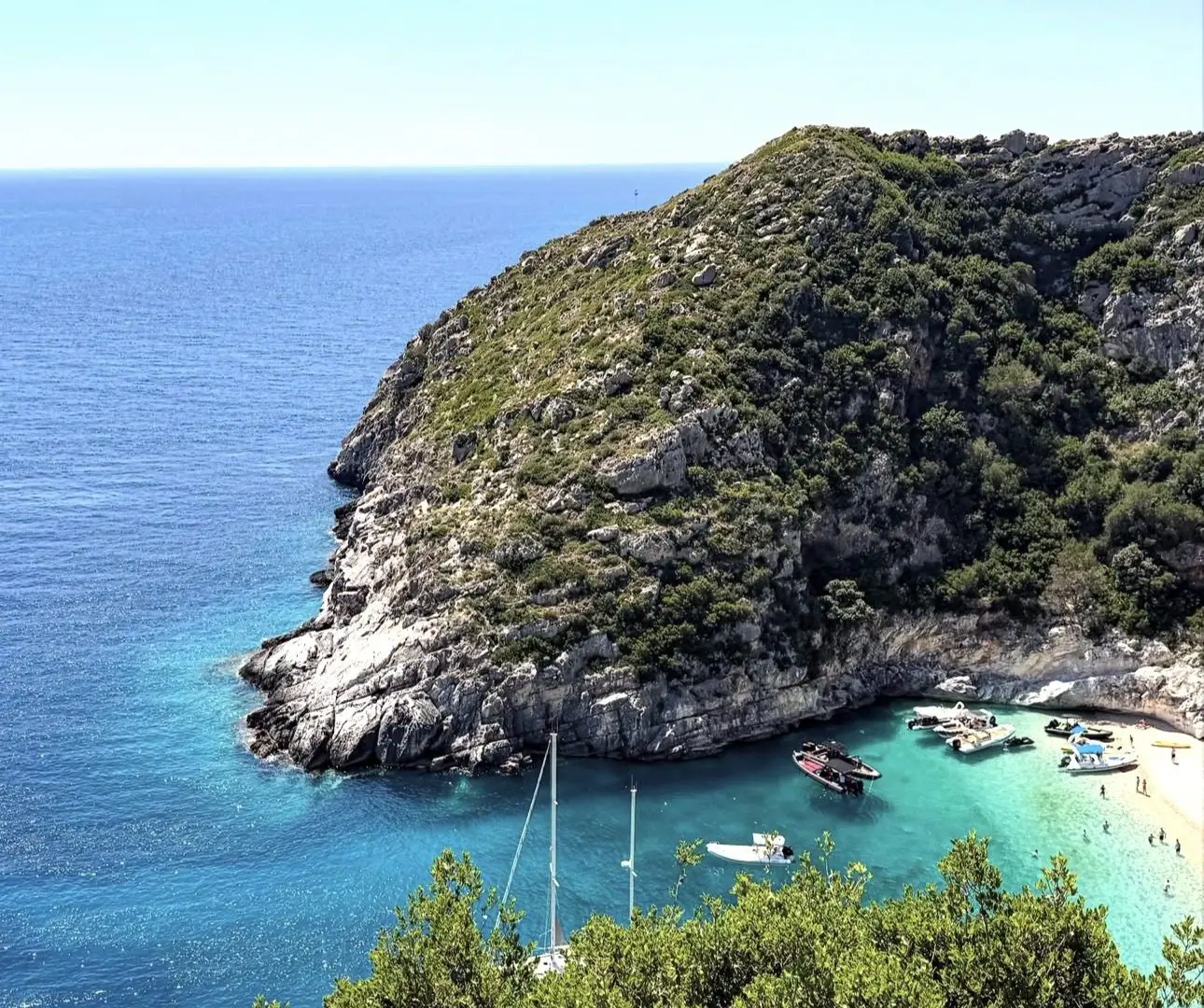
That shape made the cove useful long before anyone came for the beach. The same agency writes that ships used it as a refuge from storms at sea and that in antiquity its rock was worked as a quarry, the Gurorja e Gramës.
The cave of writings
The protected monument is called Gjiri dhe shpella e Gramës, the bay and cave of Grama, so the cave is protected together with the bay. According to the protected-areas agency, people often call it shpella e shkrimeve, the cave of writings, after the names and notes cut into the rock.
Those marks were left over many centuries by sailors waiting out bad weather and by the workers of the ancient quarry. The inscriptions page explains what they say, how old they are and who recorded them.
A natural monument inside a marine park
Grama is protected twice. The bay and its cave are on the list of natural monuments kept by the National Agency of Protected Areas, which values the site for its geomorphology, history and archaeology as well as for education, culture and tourism, and the water around it belongs to the Karaburun-Sazan National Marine Park.
The same agency lists the bay and its cave among the natural monuments of the Karaburun peninsula, together with Shpella e Dukgjonit and Shpella e Talos. The park is one of the refuges of the Mediterranean monk seal, but a sighting at Grama is never something to count on.
On Triton's tour the boat comes here from the Blue Cave, about 15 minutes up the coast.